- Free Consultation
- No Win, No Fee
- Award-Winning Lawyers
Bicycle Accident Claims in Scotland
- Obligation-Free Consultation
- No Win, No Fee
- Award-Winning Lawyers
As Featured In:
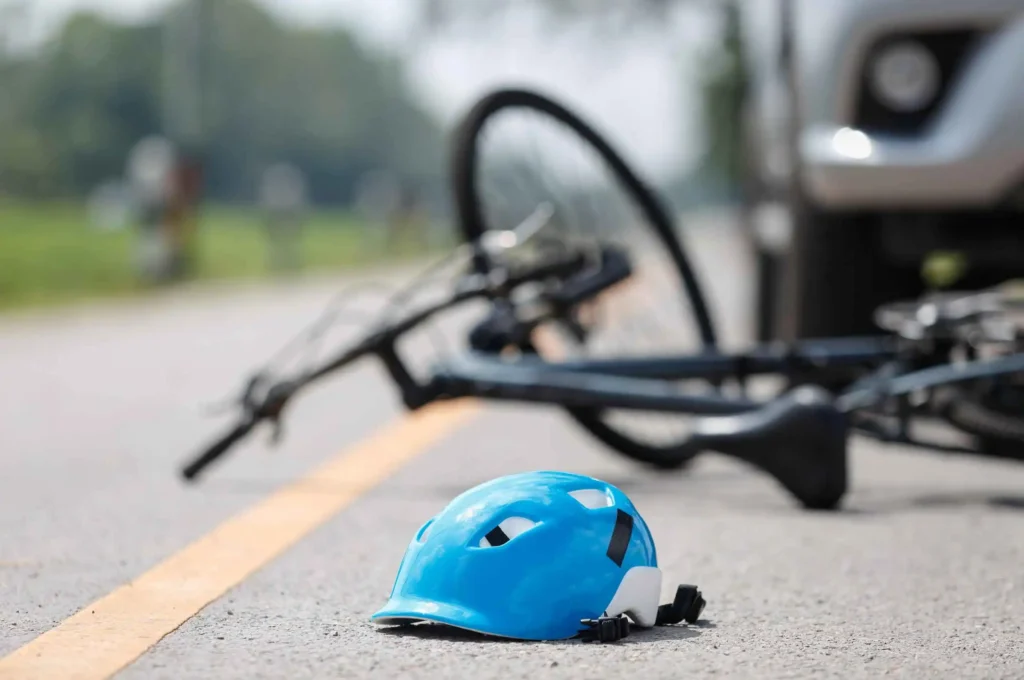
The first thing you register is your bike hitting the tarmac, and then the pain sets in. Most cycling accidents come down to straightforward negligence; it could be a driver who pulled out without looking, or a council that ignored a deep pothole in the road.
These accidents are more common than many people think. In 2025 alone, Transport Scotland recorded 392 pedal cyclist casualties, leaving hundreds of riders dealing with painful injuries, ruined bikes, and time off work.
Dealing with insurance companies while nursing broken bones or soft-tissue damage is exhausting. We work alongside a team of specialist personal injury solicitors best suited to your specific case, ensuring your representation is tailored to your needs. We oversee the entire process, keeping you fully informed while you focus on your treatment and rehabilitation.
If you were knocked off your bike, get in touch with our team today. We will give you an honest, no-obligation assessment of where you stand.
Are you eligible to make a cycling injury claim in Scotland?
You can make a cycling injury claim in Scotland if you were hurt within the last three years in a crash that was not entirely your fault.
At its core, a claim comes down to proving that another party had a legal duty to protect you, failed in that duty, and caused your injuries as a direct result. Motorists owe that duty of care to every rider sharing the road, just as local councils carry the exact same obligation for keeping road surfaces in a safe state of repair.
Sharing some of the blame does not cancel out your rights under Scots Law. If you were riding without lights after dark and a driver turned across your path without checking, both sides made mistakes. A Scottish court will not throw your case out over this. Instead, it applies contributory negligence, reducing your final compensation to reflect your share of the blame while still making sure the other party pays for theirs.
Common types of bicycle accidents we handle
Collisions with cars, vans, buses, and HGVs
Under the Highway Code, drivers of larger vehicles carry a heavier legal responsibility to protect vulnerable road users. Motorists must leave at least 1.5 metres of space when passing a cyclist at speeds under 30mph, yet close passes and abrupt turns remain everyday dangers.
Large commercial vehicles present the greatest danger on the road. A lorry turning left across a cyclist’s path accounts for a disproportionate share of catastrophic injuries, largely because blind spots along the cab can completely conceal a rider.
Video footage usually settles disputes over fault faster than witness testimony. Recordings from dashcams, bus CCTV, or handlebar cameras provide undeniable evidence of positioning and speed, which is why road traffic accident specialists in Scotland move quickly to secure recordings before they are overwritten.
'Dooring' incidents: Car doors opened into your path
When someone opens a car door directly into your path, legal fault lies squarely with the person inside the vehicle. The Highway Code requires drivers and passengers to check for approaching cyclists before opening any door, explicitly recommending the Dutch Reach technique where you reach across with your far hand to force a look over your shoulder.
Compensation claims for dooring accidents proceed directly against the insurer covering the parked vehicle. While insurance companies often argue that you should have ridden further out into the road, this tactic rarely shifts blame away from the person who opened a door without looking.
Junction, roundabout, and cycle lane collisions
Junctions and roundabouts are where cyclists face the greatest danger on Scottish roads. In a recent road safety review, Transport Scotland linked 14 of the 32 fatal pedal cyclist collisions directly to junctions.
Most of these crashes happen because drivers misjudge how fast a bicycle is traveling, or turn straight across a cycle lane without checking their mirrors. On roundabouts, drivers joining traffic or switching lanes have to give bicycle riders space; sticking to a painted bike lane doesn’t mean you give up your right of way.
When a driver disputes what happened, proving fault comes down to hard evidence rather than word against word. That means checking road markings, traffic light timing, and any dashcam or CCTV footage that shows who had priority when the collision took place.
Accidents caused by potholes and poor road surfaces
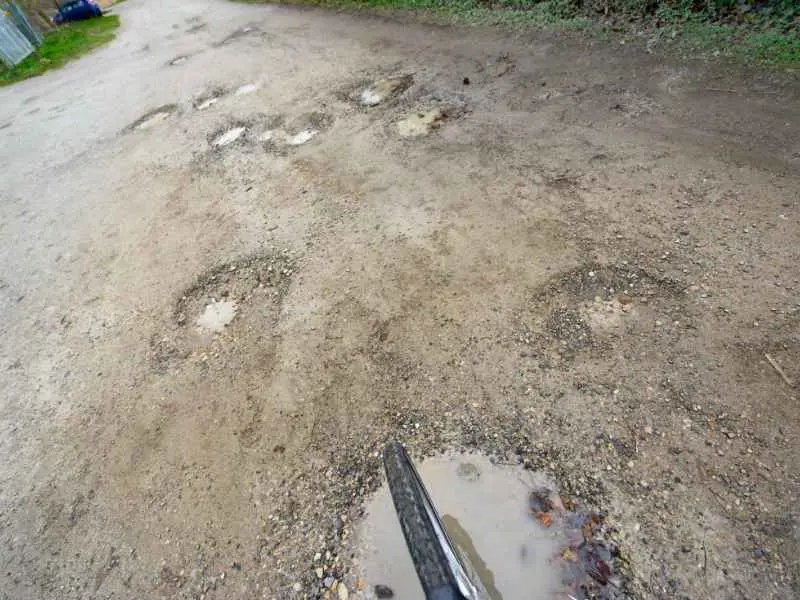
Claims involving potholes or broken tarmac work differently from collisions caused by negligent drivers. Under Section 1 of the Roads (Scotland) Act 1984, local councils have a statutory duty to maintain public roads, which allows you to claim compensation if an unaddressed road defect causes your crash.
Their standard tactic is to pull out inspection records and argue the hole was not deep enough to bother fixing, or to claim that no one had reported it yet. Because of this, gathering your own evidence right away is vital.
Take clear photos of the problem with an everyday item like a coin or water bottle beside it for scale, note the precise location, measure the depth if you can do so safely, and record the date. Report the defect to the local authority and save the reference number. Councils may fill potholes soon after an accident is reported, and without your own photos, the proof vanishes.
Incidents involving pedestrians or other cyclists
Not every cycling crash involves a motor vehicle. Many collisions happen on canal towpaths and shared walking routes, where a pedestrian steps out without looking or another cyclist cuts across you recklessly.
Just because no cars were involved does not mean the person who caused your crash gets off the hook. Most people have no idea that ordinary household contents insurance covers personal liability, meaning their home policy usually ends up footing the bill for your injuries and damaged bicycle.
Where shared paths intersect with traffic, the risks increase quickly. Any pedestrian or cyclist struck by a vehicle at a crossing point faces the exact same challenge of proving fault, making witness details and camera footage just as essential.

Talk to Our Compensation Experts Today
Find out where you stand - completely free of charge.
Simply fill out the form, and one of our specialists will contact you within one hour.
Need urgent advice?
Call us immediately at 0333 3051 337
- £3 Million+ Recovered for Our Clients
- No Win, No Fee - Guaranteed
- Proudly Supporting Scots Since 2010
- 10 Convenient Offices Across Scotland
Request a FREE call
The impact of not wearing a helmet or high-visibility clothing
You can still claim compensation even if you were not wearing a helmet. Wearing one is not a legal requirement for cyclists anywhere in the UK, and riding without head protection does not invalidate your case.
The only real debate is whether an insurance company can use it to lower your payout. To do that, the insurer has to prove that wearing a helmet would have prevented or reduced the exact injury you suffered. If you broke your collarbone, smashed your wrist, or bruised your ribs, a helmet is completely beside the point, and the insurer’s argument collapses. If you suffered a head injury, medical experts will look at whether head protection would have lessened the damage, and a court might reduce your settlement accordingly.
The exact same logic applies to high-visibility jackets and bike lights. Riding after dark without lights can lower your final payout, but it never excuses a driver who failed to pay attention to the road ahead.
What to do immediately after a cycling accident
After a bicycle accident you should:
- Call 999 immediately if anyone is badly hurt, and do not attempt to move if you suspect a severe neck, back, or spinal injury.
- Move away from moving traffic only if you can do so safely without aggravating your injuries.
- Take the driver’s details: name, address, registration and insurer. Photograph the registration plate.
- Collect details from witnesses: anyone who saw what happened. Witnesses often vanish quickly.
- Photograph everything before bikes or vehicles are moved: vehicle positions, road surface, lighting, debris, injuries, and clothing.
- Never admit blame. Everyday politeness or an apology can be misinterpreted as an admission of fault later.
- Get checked by a GP or at A&E even if you feel fine. Soft tissue damage and concussions often surface hours later; early medical records also support your claim.
- Keep all damaged kit. Your helmet, gloves, clothing, and frame carry impact marks that serve as vital physical evidence.
- Write down your account of what happened on the same day while details remain fresh.
Claiming for hit-and-run or uninsured drivers in Scotland
If the driver who knocked you off your bike speeds away or turns out to have no insurance, your claim does not disappear. An organisation called the Motor Insurers’ Bureau (MIB) steps in to cover your damages, paying out compensation when you are injured by a hit-and-run driver or when the driver had no insurance at the time.
The catch with MIB claims comes down to strict rules and tight deadlines. You must report the collision to Police Scotland quickly and provide detailed evidence through specific forms before they agree to settle. Delaying your report even by a few days can give the Bureau grounds to reject a genuine case, so getting the process started straight away makes all the difference.
£3+ Million in settlements
That’s how much our expert personal injury team has achieved for our clients.
That’s why we’re Scotland’s leading personal injury firm.
What compensation can you claim for a bicycle accident?
A cycling settlement in Scotland boils down to two things. You receive a payout for your physical pain, shock, and the disruption to your everyday routine, known in Scots Law as solatium, alongside full reimbursement for every penny the crash cost you out of pocket.
There is no fixed price tag on pain. Scottish courts use official benchmarks called the Judicial College Guidelines as a starting point, adjusting the amount to reflect how heavily your specific injuries have affected your daily routine, hobbies, and independence.
The financial side is where cyclists often miss out on what they are owed. Beyond immediate lost wages while you are off work, a thorough claim can recover:
- Private physiotherapy, scans, and specialist medical care
- Travel costs to clinic appointments and alternative transport while you cannot ride
- Compensation for the time family members spend helping and caring for you at home
- Future lost income if lasting physical limits affect your career or earning potential
- Full replacement or repair costs for your bike, helmet, cycling kit, GPS unit, lights, and gear
Minor sprains and strains generally settle once you make a complete recovery. For example, a broken arm or wrist from a cycling fall typically settles once the bone has fully knit together and you have regained your grip and movement. For more severe accidents, broken bone and fracture claims in Scotland cover everything from straightforward breaks needing a simple cast to complex fractures requiring metal plates, pins, and extensive surgery.
Strict time limits for Scottish personal injury claims
Under the Prescription and Limitation (Scotland) Act 1973, a personal injury claim must be formally raised in court within three years of the accident date. This deadline applies to raising court proceedings, not simply the date you first seek advice.
The rules work differently for young riders. If a cyclist was under 16 when the crash happened, their three-year window does not start until their sixteenth birthday, giving them until age 19 to take legal action. The clock is also paused for any adult unable to handle their own legal decisions.
While three years may sound like plenty of time, the critical window is much narrower. CCTV and dashcam footage are regularly overwritten within weeks, and witnesses can move or become untraceable. Starting the process early ensures evidence is secured while it can still prove liability.
Make a Bicycle Accident Claim Today
Use our free online claim check tool and find out in minutes if you have a claim.
No Win No Fee cycling claims: Funding your case in Scotland
In Scotland, No Win No Fee is arranged under a speculative fee agreement. Nothing is payable upfront, and the fee is an agreed, capped percentage of your compensation, payable only if your claim is successful.

Two essential legal protections limit your financial exposure:
- Qualified One-Way Costs Shifting (QOCS): Ensures you are generally protected against paying the defender’s court expenses if the case does not succeed (provided you have acted honestly).
- After the Event (ATE) Insurance: Covers disbursements and unexpected case outlays, removing financial risk from pursuing your claim.
The exact fee percentage, whether VAT is included, and when payment is due are confirmed in writing before you begin, so there are never any unexpected costs deducted from your payout.
DEDICATED CLAIMS ADVISORS
Our dedicated claims advisors are always available to offer free legal advice.
100% NO WIN NO FEE CLAIMS
All our claims are processed on a No Win No Fee basis; you pay nothing if you lose.
MILLIONS SECURED IN DAMAGES
To date, we have secured millions in damages.
THOUSANDS OF SATISFIED CLIENTS
To date, we have helped thousands of clients recover compensation and continue to do so.
Why choose our specialist Scottish cycling lawyers?
When you have been hurt due to another party’s negligence, the road ahead can feel overwhelming. Our firm specialises in navigating the Scottish legal system to make the claims process straightforward, providing clear guidance and step-by-step support so you receive the fair compensation you deserve.
We work alongside a team of specialist personal injury solicitors best suited to your specific case, ensuring your representation is tailored to your needs. We oversee the entire process, keeping you fully informed while you focus on your treatment and rehabilitation.
Cycling claims demand genuine expertise rather than a generic personal injury approach. We know the high-risk junctions and roundabouts in Glasgow, Edinburgh, and across Scotland where collisions repeatedly happen. We also know how to counter the standard arguments insurance companies run to dispute close-pass, left-hook, and dooring claims.
If an insurer drags their feet or refuses to offer a fair payout, your claim does not stop there. Your solicitor will raise formal proceedings in the local sheriff court, or take the case to the Court of Session in Edinburgh when dealing with catastrophic injuries or complex disputes.
Frequently asked questions about Scottish bike claims
Can I claim if I was injured on an e-bike?
Yes, provided the bicycle meets the Electrically Assisted Pedal Cycle (EAPC) regulations: a motor rated at no more than 250 watts, electrical assistance cutting out at 15.5mph, and operable pedals. Modified or de-restricted e-bikes with higher outputs may be classified as unregistered motor vehicles, which introduces additional legal complexity to liability.
Do I need a police report to make a cycling claim?
A claim can still go ahead without one, but by law any injury accident must be reported to Police Scotland. Having an official police reference gives your case immediate credibility, providing impartial evidence of who was involved and the exact conditions on the road.
Will my cycling injury case have to go to court?
Most Scottish cycling claims settle successfully through negotiation without needing a courtroom hearing. When an insurer refuses to make a reasonable offer, initiating proceedings in the sheriff court is often the step that prompts a fair and realistic settlement.
How is Scottish personal injury law different from England and Wales?
Scotland has an independent legal system with its own courts and terminology. Payouts for pain and suffering are known as solatium rather than general damages, and the injured person is called the pursuer instead of the claimant. Crucially, proceedings follow Scottish court rules, which means claims must be managed by professionals qualified in Scots Law.
Start your free cycling claim assessment today
If you have been injured due to someone else’s negligence, contact our team today for a confidential, no-obligation assessment of your claim.
A first conversation costs nothing and commits you to nothing. Call our team, request a callback, or complete our online form. Tell us what happened, where the collision took place, and what injuries you have sustained. We will provide clear guidance on whether you have a claim, what compensation you could recover, and how the process works from start to finish.